For TV Drama, which is section A of the exam, you will be expected watch a 4 minute extract of a TV Drama 4 times and then textually analyse it in terms of:
Camera Shots, Angle, Movement and Composition
Shots
Establishing shots - help to establish the scene by showing the audience the location they are in.
Master shot - The main shot of the scene that is often returned to. Directors often film these as wide shots so the audience can get their bearings as to who is in the scene. The director then uses other shot sizes, such as close ups or medium shots to cut into the master shot so that the audience can get a closer look at the actors.

Close up - This is where the camera is close drawn into the
subject and is focused squaredly. This is used to show facial expressions,
close up action and actions which could be very important later in the film.

Mid-shot - This is a shot which is taken at a medium distance. On a person the bottom of the screen of the camera would be between knee and hip height and then the top of the camera to be a foot higher than the head.

long shot - This is a shot of the character and what is based around them, this tells the audience the scene and what's going on.

wide shot - A wide shot is where it shows a lot of the area or environment around the subject. Wide shots allow the audience to clearly see the surroundings and area to make more sense of the scene.
Mid-shot - This is a shot which is taken at a medium distance. On a person the bottom of the screen of the camera would be between knee and hip height and then the top of the camera to be a foot higher than the head.
long shot - This is a shot of the character and what is based around them, this tells the audience the scene and what's going on.
wide shot - A wide shot is where it shows a lot of the area or environment around the subject. Wide shots allow the audience to clearly see the surroundings and area to make more sense of the scene.

two-shot - A shot of two people together.

aerial shot - An aerial shot is where the shot is taken from high up facing down or across a view. For example the photo being taken from a helicopter.
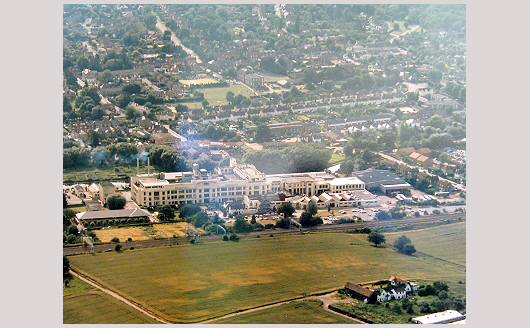
point of view shot - A shot as if the viewer were looking directly through the eyes of a specific character. This helps the viewers feel involved with in the scene and story.

over the shoulder shot - This is where two people are having a conversation and the camera is positioned on one talkers shoulder and is filming the opposite talker. This camera opposition helps the viewers feel involved with in the conversation as if they are talking to the viewers.


Angle
High angle shot - High angle shot is a shot where the camera is placed up high looking down on a person view or object. High angle creates a sense of vulnerable, inferior and weakness.

Low angle shot - low angle shot is where a camera is placed down low to look up at a view, object or person. This is to create the effect of superiority, strength, being in charge and bravery.

Canted angle shot - When the camera is filmed at a angle. This is to give a sense that the view or object, or person has something wrong with them or something bad is about to happen.
Canted angle shot - When the camera is filmed at a angle. This is to give a sense that the view or object, or person has something wrong with them or something bad is about to happen.
Birds eye view - This shot is taken from directly from above. This type of shot can be disorienting, and the people photographed seem insignificant.

Eye level shot - this has the clearest view of the object or character and sets a dramatic sense to the scene.

Oblique angle - This angle, the camera is tilted laterally, giving the image a slanted appearance. This angle suggests tension, transition and also impending movement.
Eye level shot - this has the clearest view of the object or character and sets a dramatic sense to the scene.
Oblique angle - This angle, the camera is tilted laterally, giving the image a slanted appearance. This angle suggests tension, transition and also impending movement.
Movements
Pan - A camera move both left and right.

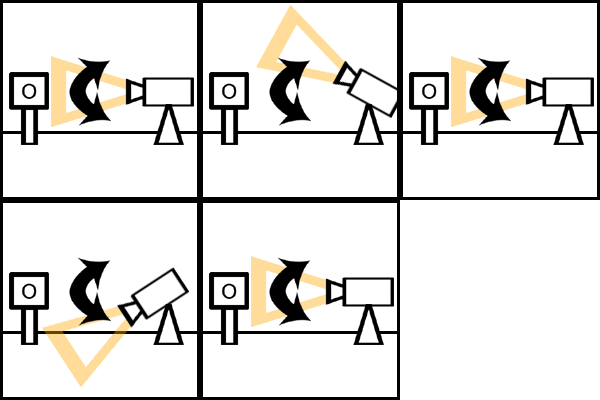
Steadicam - Steadicam shots are where the camera man wears a body armour with the camera attached on the end of the arm. Steadicam shots are used for maximum freedom and movement as well as creating shots that are steady and flow nicely. The downside of steadicam is that it involves a specialist and can be expensive to use compared with a track and dolly.

Handheld shot - Where the camera man holds the camera for maximum flexibility of the type of shots he wants to use. This is a very specialised skill and is often used to documentaries and news items. It is used in dramas and feature films often to create a feeling of rawness/of being present in the film or for making the film feel like a news or documentary item.

Zoom - Zooming means altering the focal length of the lens to give the illusion of moving closer to or further away from the action. Zooms are less popular now due to the more sophisticated shots supplied by a track and dolly, but they are used on documentaries and for visual effects.
Reverse Zoom - This is where the camera is moving away from the particular image and is used to show a wider picture or context of an image.
Crane - The camera is placed on the arm and allows it to be lifted into the air, often for high angle shots.

Composition:
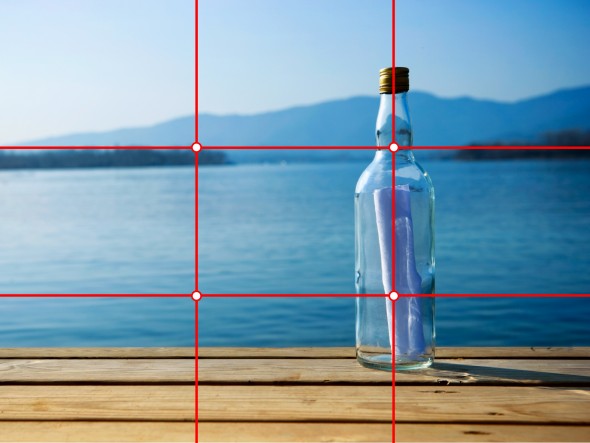
Rule of thirds - The rule of thirds is applied by aligning a subject with the guide lines and their intersection points, placing the horizon on the top or bottom line, or allowing linear features in the image to flow from section to section.
Rule of thirds - The rule of thirds is applied by aligning a subject with the guide lines and their intersection points, placing the horizon on the top or bottom line, or allowing linear features in the image to flow from section to section.
depth of field - Is about the depth of focus in any given shot. It is a focus pullers sob to alter the camera lens (on a drama or feature film) to the correct focal distance so the object or actor concerned is in focus. Sometimes shallow depth of field is used so that only important people or objects are in focus to help the audience understand what is important to look at in each frame shot.

Deep and shallow focus - Deep focus is a photographic and cinematographic technique using a large depth of field. Depth of field is the front-to-back range of focus in an image — that is, how much of it appears sharp and clear. Shallow focus is a photographic and cinematographic technique incorporating a small depth of field. In shallow focus one plane of the image is in focus while the rest is out of focus. Shallow focus is typically used to emphasize one part of the image over another.
focus pulls - The focus pull is useful for directing the viewer's attention. For example, if there are two people in shot but only one is in focus, that person is the subject of attention. If the focus changes to the other person, they become the subject. This is often used in drama dialogues — the focus shifts backwards and forwards between the people speaking.


Editing
o Includes transition of image and sound – continuity and non-continuity systems.
o Cutting: shot/reverse shot, eye line match, graphic match, action match, jump cut, crosscutting, parallel editing, cutaway; insert.
o Other transitions, dissolve, fade-in, fade-out, wipe, superimposition, long take, short take, slow motion, ellipsis and expansion of time, post-production, visual effects.
Shot/Reverse Shot - is an editing technique that defined as multiple shots edited together in a way that alternates characters, typically to show both sides of a conversation situation.
eye-line match - a shot of a character looking at something cuts to another shot showing exactly what the character sees. Essentially, the camera temporarily becomes the character’s eyes with this editing technique.

Jump-Cut - is an example of the style of editing where one shot seems to be abruptly interrupted. Typically the background will change while the individuals stay the same, or vice versa. Jump-cuts stray from the more contemporary style of continuity editing where the plot flows seamlessly to a more ambiguous story line.
Graphic matches, or match cuts - are useful in relating two otherwise disconnected scenes, or in helping to establish a relationship between two scenes. By ending one shot with a frame containing the same compositional elements (shape, colour, size, etc.) as the beginning frame of the next shot, a connection is drawn between the two shots with a smooth transition.
Match on Action - is an editing technique used in continuity editing that cuts two alternate views of the same action together at the same moment in the move in order to make it seem uninterrupted. This allows the same action to be seen from multiple angles without breaking its continuous nature.
Cross cutting - Cross cutting is where the camera cuts from scene to scene. Editing that alternates between shots occurring simultaneously in two or more different location.
180 degree rule - The angle between two consecutive shots should not exceed 180 degrees, in order to maintain spatial relationship between people and objects in any given sequence of shots.

30 degree rule - The angle between any two consecutive shots should not be less than 30 degrees, in order to maintain spatial relationships between people and objects in any given sequence of shots.
Re-establishing shot - A shot that returns to a view of a space or location after a series of closes up.

Insert - In film an insert is a shot of part of scene as filmed from a different angle and/or focal length from the master shot.
Short take -
Long take - A long take or one is an uninterrupted shot in a film which lasts much longer than the conventional editing pace either of the film itself or of films in general, usually lasting several minutes.
Ellipsis and expansion of time - Ellipsis presents an action in a way that it consumes less time on screen than in the story. Expansion of time is created through overlapping editing. This is opposite to ellipsis as it presents an action that it consumes more time on the screen than it does in the story. This contains cuts in which have been repeated in previous action.
Slow motion effect - This is where times appear to be slowed down with in the scene. This creates tension and atmosphere.
Post production - These offer a large selection of digital transitions with various effects. These effects include colour replacement, focus drops, lighting effects, animated effects, pixilation and more.
Types of Camera cuts and shots.
Transitions, dissolve, fade-in, fade-out, wipe.
> Editing Techniques <
Sound
sound effects; sound motif, sound bridge, dialogue, voiceover, mode of address/direct address, sound mixing, sound perspective.
Sound track - score, incidental music, themes, stings, ambient.
Diegetic sound - Sound whose source is visible on the screen or whose source is implied to be present by the action of the film:
- voices of characters
- sounds made by objects in the story
- music represented as coming from instruments in the story space ( = source music)
Non-diegetic sound - Sound whose source is neither visible on the screen nor has been implied to be present in the action:
- narrator's commentary
- sound effects which is added for the dramatic effect
- mood music
Synchronous sound - sound that is matched to certain movements occurring in the scene. This can sometimes be recorded on a film tape or magnetic tape. The sound and movement must match and be very precise on the timing.
Asynchronous sound - Match the sound to whatever is in the scene however it's not precise synchronised with the action with in the scene.
Sound perspective - Creates an illusion of directionality and audible perspective. This is achieved by using two or more audio channels that are independent through a configuration. Normally of two or more loudspeakers in such a way as to create the impression of sound that is heard from various directions. The audio track can be mixed in a variety of ways.
Voice over - This is pre-recorded and placed over the top of a film or either a video and this is commonly used in documentaries or news reports to explain and give information. Voice overs are also used to provide narrative in film or help create a back story to a certain character.
Direct address - This is when an actor or either presenter look directly into the video lens as though they are addressing the audience. This makes the audience feel more included and engaged into the program.
Leitmotif - This is a recurring piece of music or sound associated with a particular person, place or idea.
Sound bridges - Adding to continuity through sound, by running sound from one shot across to the other. This makes the actions seem uninterrupted.
Contrapuntal sound - This is the opposite type of music. This is the type of music you would expect to hear in the scene and it sounds like a contradiction and can either have highly disturbing or comic effect.
Hyperbolic sound - This is when the music or sound effects are exaggerated to try and make it sound more dramatic and exciting. Action movies usually use this effect to create tension in a scene where there is a lot of action breaking out.
Soundtrack: score, incidental music, themes and stings, ambient sound.
Mise-en-Scène
Production design: location, studio, set design, costume and make-up, properties. Lighting; colour design, body language and facial expressions.
setting/location: Setting creates both a sense of place and a mood and it may also reflect a character’s emotional state of mind.
Costume, make up and hair: Indicator to us of a character's personality, status and job. This will also tell us what era the film is based in whether its modern or old fashion style and also gives the audience a clue of what culture and society it will centre around.
Facial expressions and body languages: Facial expressions gives a clear indicator of how the character is feeling. Body language can indicate how one character is feeling towards another character and this can indicate the relationship between them.
Lighting and colour: To highlight the important characters or object with in the frame. There is two types of lighting, one is low key lighting which brings a effect of sharp contrast and dark areas. Another is high key lighting, which makes the extract look more realistic and bright, this will be used to present a sunny day. Colour can reflect on the characters state and emotion. This creates a meaning to the scene and causes a dramatic effect in some cases.
Representation
This is how people are represented in the scene or extract.
You will then relate these technical and visual codes to one of the following aspects of representation:
Costume, make up and hair: Indicator to us of a character's personality, status and job. This will also tell us what era the film is based in whether its modern or old fashion style and also gives the audience a clue of what culture and society it will centre around.
Facial expressions and body languages: Facial expressions gives a clear indicator of how the character is feeling. Body language can indicate how one character is feeling towards another character and this can indicate the relationship between them.
Lighting and colour: To highlight the important characters or object with in the frame. There is two types of lighting, one is low key lighting which brings a effect of sharp contrast and dark areas. Another is high key lighting, which makes the extract look more realistic and bright, this will be used to present a sunny day. Colour can reflect on the characters state and emotion. This creates a meaning to the scene and causes a dramatic effect in some cases.
Representation
This is how people are represented in the scene or extract.
You will then relate these technical and visual codes to one of the following aspects of representation:
· Age
· Ethnicity
· Sexuality
· Class and status – including star status
· Physical ability/disability
· Regional identity
· Gender

Good work. Please consider the following:
ReplyDelete1. 2nd sentence in post - for TV drama exam you have to consider all elements regarding textual analysis as written below (not just camera as you have written).
2. images needed for two shot, aerial shot and POV shot
3. The image of Josh is an extreme close up not a close up.
4. Images for angles
5. Arrows for movement
6. Images or films or links for each example please.
7. Powerpoint embeded for sound
8. Short takes are usually placed in sequence next to each other to create a fast pace which provides a sense of speed and tension.
your definitions are good but I need to see evidence through images/links/film clips for each definition so I know for sure you have 100% understanding as these definitions play a major part in your work this year.
This comment has been removed by a blog administrator.
ReplyDeleteI still think it would be beneficial to you to add more examples - eg tracks, steadicam, and lots of links to different sound effects, especially as many of these are new to you.
ReplyDeleteREPLY to ALL comments please.
Yeah, sounds good. Will do this in my frees.
ReplyDeleteThanks